Starten Sie den Audio-Text
Mit dem Audio-Player können Sie sich den Text anhören. Darunter finden Sie das Transkript.
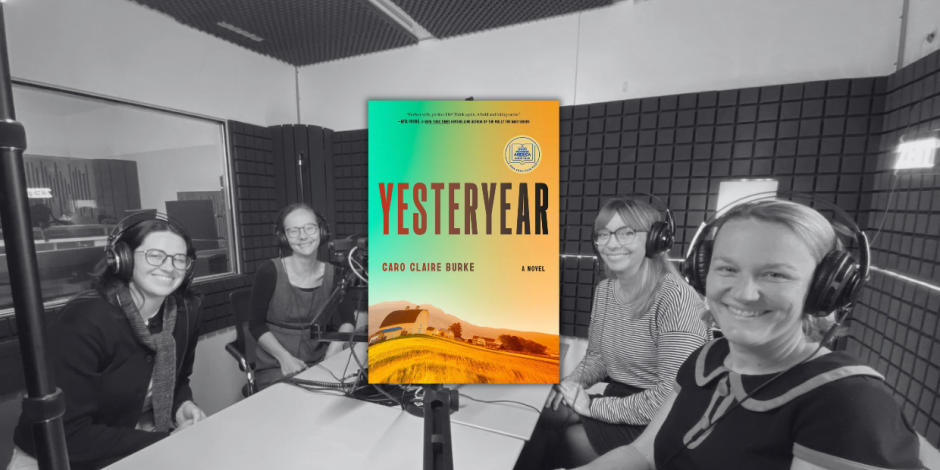
Transcript: Yesteryear discussion
Mae McCreary: So who wants to start off? Who has a strong opinion about Yesteryear?
Rachel Preece: I have a very strong opinion about Yesteryear, and I found it enragingärgerlich, wütend machendenraging. I know that was sort of the point, and I know that it’s a critique of tradwives and this aspect of society, particularly in the US, but I just found there were so many parts of it that I hated. And I think one of them or one of the main points for me was Natalie, the protagonist, was incredibly unlikable, and I think to get through a whole novel you have to have something redeemingausgleichendredeeming about the main character. She was very intelligent and yet simultaneouslygleichzeitigsimultaneously completely idiotic. She went to Harvard University at least, I mean she dropped out but she was clever enough to enrollsich einschreibenenroll at Harvard. And then she said such ridiculous things. She didn’t seem to be able to think critically at all. She’s described as this academic overachieverÜberflieger(in)overachiever, but she was then also remarkably uncuriousuninteressiertuncurious about other people’s viewpoints. And there was no attempt to understand a different way of living or believing.
Lorraine Turner Akcakaya: I agree. I enjoyed the book as a sort of a page-turnerspannendes Buchpage-turner. It’s not high-brow anspruchsvollhigh-brow literature. It’s just a fast-pacedtemporeichfast-paced book with a very good twist. But I completely agree with you, Rachel. She was not authentic as a character. You couldn’t relate to her as a mother. You couldn’t relate to her as a person. There was this kind of, like... she’d grown up with this sort of religious aspect, but then she didn’t feel real somehow. I completely agree. Yeah, I really do.
Susanne Krause: That’s actually one of the things that I found interesting about the book, that she was really unlikable as a protagonist. And that’s basically... I found out only later that there’s a huge hype about the book. I just started reading it. And I actually... I don’t understand what the fussAufhebens, Wirbelfuss is about. And I think it’s nice that you have strong emotions about the book because for me, it’s not that long ago that I read it and I... I think I kind of forgot a lot about it and I just don’t understand why there’s so much fuss about this book.
Mae: On that point, Susanne, I did look into why there is so much fuss, because there really is. It’s everywhere on social media, and I think the book was intended to be a critique of the politics of Christian nationalism, but it critiques the politics of Christian nationalism so indirectly because there’s nothing specific in this book. It’s all, kind of, you inferannehmen, schlussfolgerninfer that she’s in this family that is linked to, like, very powerful Christian nationalism. It doesn’t say it outrightdirekt, absolutoutright. And in The Guardian, there was a review of this book and there was a line in the review that said, “Perhaps this is a deliberatebewusstdeliberate ployMasche, Schachzugploy to reach more American readers, but to a European, it feels like a bizarre omissionVersäumnis, Ausblendenomission.” And I think that really kind of hits the nail on the head. It is interesting that she doesn’t say anything specific, good or bad, about tradwives or politics or womanhood, but it is getting people to debate these topics and talk about these topics. And so, is the book about what’s written or is the book about what people are discussing once they read the book? And I think that’s why it’s become so big.
Rachel: But I think for me, part of what angered me so much was that it felt like an attempt at cultural commentary, and I think she could have done so much more with it. I think there is a huge case for criticizing children being put on the internet without consentZustimmungconsent and these women portraying these perfect housewife lives. Actually, they’re entrepreneurUnternehmer(in)entrepreneurs and I think there could have been so much more done to encourage a discussion there, and it seems in part I felt it was just meangemein, schäbigmean. There was one line where the protagonist, Natalie, was described as “exhaustederschöpftexhausted and beautiful” and it just felt unnecessarily cruel because we all know that there are influencers in the US who this book is probably based upon. And it just felt as though she was taking a take a dig at sth. (ifml.)gegen etw. stichelndig at these influencers and without there being much of a backboneRückgratbackbone. I think it could have been much more nuanced and much more cleverly done.
Lorraine: She’s a really sort of, like, classic anti-heroineAnti-Heldinanti-heroine, and you really don’t like her at all. There’s nothing that you sort of warm towards her, and I was thinking maybe we enjoy reading about people that we also hate. I don’t know.
Mae: There’s a line in the book where the protagonist is describing that the job of the tradwife is not to be loved and it’s not to be insufferableunerträglichinsufferable. It’s to be both at the same time, which is to be addictivesüchtig machendaddictive. And it’s interesting because this book is kind of that, where some people love it, but some people find it insufferable and regardlesstrotzdemregardless, people cannot stop talking about it. And the book is kind of holding the place of the tradwife in American culture. It’s very divisive and people cannot look away. They cannot stop reading it, they cannot stop talking about it.
Lorraine: I agree, in some ways it is actually sort of like a bigger metaphor for that sort of Instagram genre itself.
Mae: So would you recommend that our listeners read it?
Lorraine: I think, for me, what I really like is I’d been in a book festgefahren seinbe in a rutrut before I read this. I was reading this 700-page book, The Loneliness of Sonia and Sunnydt. Titel: Die Einsamkeit von Sonia und SunnyThe Loneliness of Sonia and Sunny by Kiran Desai, and it was a nice book, but it just went on and on.
Susanne: It’s so beautiful.
Lorraine: It’s beautiful, but it’s one that you just, you know, you drift in and out of it. And so I’d been reading this for two months and then I read Yesteryear and it was such a different pace. It’s got this really fast, like you said, this very addictive, fast pace. So I really enjoyed the pace.
Rachel: I wouldn’t recommend reading it. But, and I’m going to sound like a horrible snob, I had just read Dostoevsky, and then I started Yesteryear, and the juxtapositionGegenüberstellungjuxtaposition did not work. But on the other hand, I did think there is a lot of room for discussion, yes, there’s a lot to talk about.
Susanne: You can definitely read it, but I do recommend The Loneliness of... what’s the name?
Lorraine: The Loneliness of Sonia and Sunny.
Susanne: Yeah, read that!
Mae: I would go with you, Lorraine. It got me out of a rut. I was reading just a series of books that had been translated into English from other languages, and it was such a mental exercise and, you know, the pacing was off and the stories were good, but it took a lot of focus. And then I read Yesteryear and I didn’t have to think. I breeze (ifml.)hier: im Nu durchlesenbreezed right through it. It was fun and, you know, deals with serious topics in a very light-hearted way. And yeah, I think it’s fun, especially for when you’re on vacation. It’s a fast read.
Lorraine: Exactly.
Neugierig auf mehr?
Dann nutzen Sie die Möglichkeit und stellen Sie sich Ihr optimales Abo ganz nach Ihren Wünschen zusammen.