

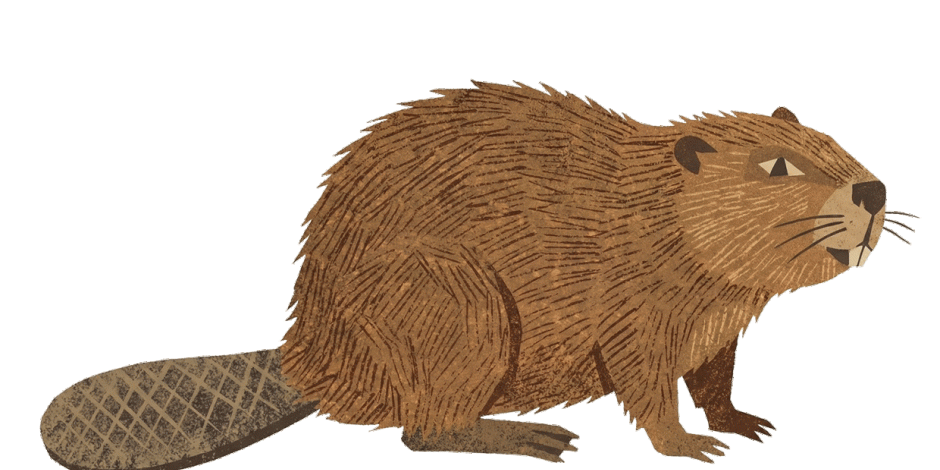
Cigarettes, vanilla ice cream, chewing gum and perfume have one thing in common: they’re partly to blame for why wild beaverBiberbeavers haven’t existed in Britain for more than 400 years.
In addition to meat and fur, beavers produce another valuable substance: castoreum oilCastoreum; Bibergeilcastoreum oil – a thick, yellowish-brown goo (ifml.)klebriges Zeug; hier: harziges Sekretgoo that comes out of a pair of castor sacCastorbeutelcastor sacs near the beaver’s bum (UK, ifml.)Pobum. As gross (ifml.)ekliggross as it sounds, this substance smells like muskymoschusartigmusky vanilla, which made it the perfect flavouring for food, drinks and cigarettes. It even holds medicinal properties.
In the the Middle Agesdas MittelalterMiddle Ages, the demand for castoreum oil was so high that beavers were hunted to extinctionAussterbenextinction. The last recorded beaver in Britain was in Scotland in the 1500s. But now, thanks to the British government and lots of public support, wild beavers are back in Britain. According to the BBC, four wild beavers were “released in a Dorset nature reserveNaturschutzgebietnature reserve” in 2025.
Neugierig auf mehr?
Dann nutzen Sie die Möglichkeit und stellen Sie sich Ihr optimales Abo ganz nach Ihren Wünschen zusammen.